

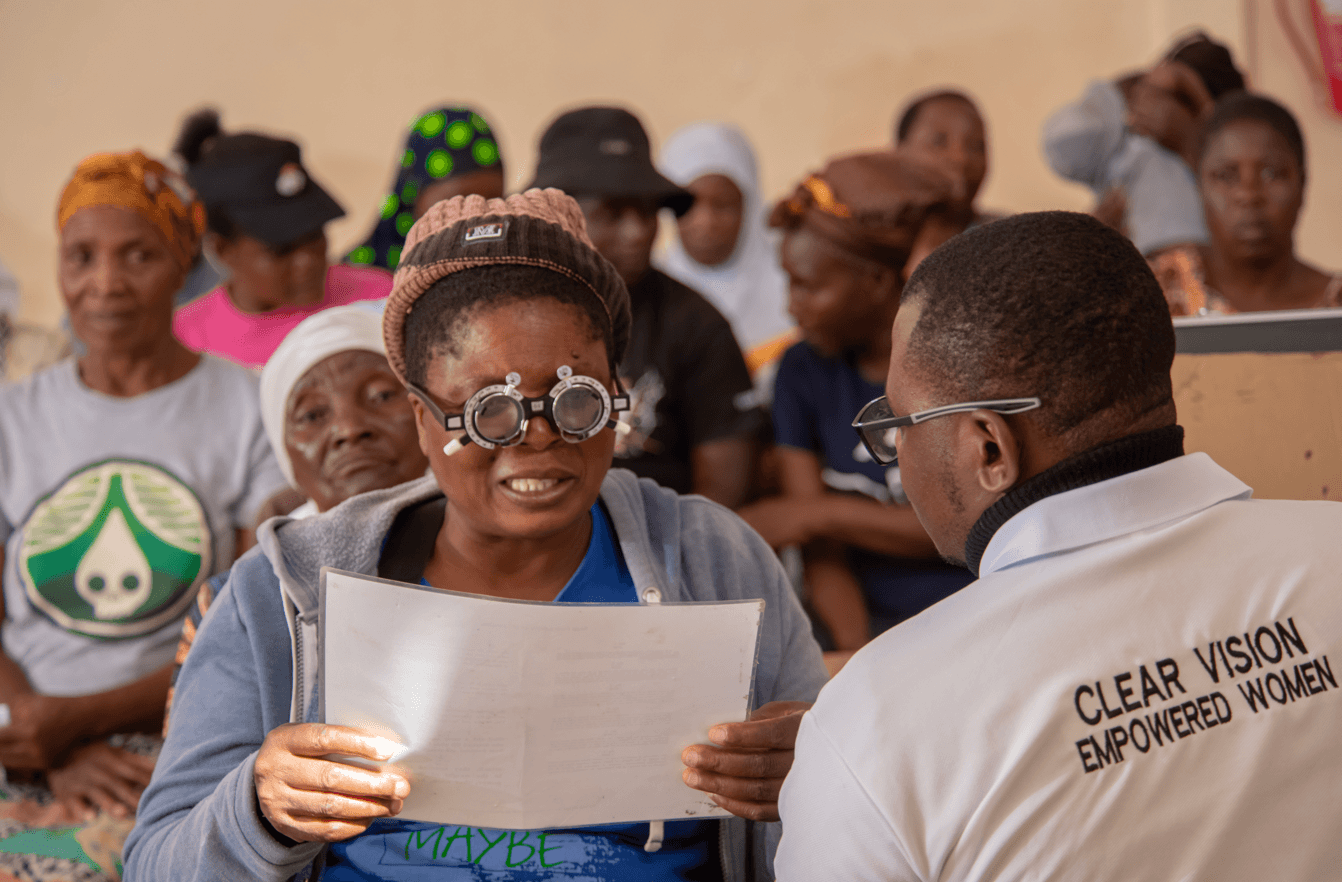
In communities like Epworth and Hopley, the ability to see clearly is often the difference between independence and limitation, between opportunity and exclusion. Yet for many, especially women, access to even the most basic eye care services remains out of reach.
Vision Ability Zimbabwe (VAZ) in partnership with the Ministry of Health and Child Care, with support from the Direct Aid Program (DAP), is implementing a community-driven initiative aimed at improving access to inclusive and equitable eye care services for underserved populations. This project places a deliberate focus on women and persons with disabilities, groups that often face the greatest barriers in accessing healthcare.
In many low-income and peri-urban settings, women are disproportionately affected by limited access to health services. Economic dependency, caregiving responsibilities, and restricted mobility often mean that women delay or forgo seeking care altogether. As a result, preventable conditions such as refractive errors and cataracts go untreated, impacting not only their health but also their ability to support their families and participate fully in community life. By prioritizing women, the project is addressing a critical gap, ensuring that those most likely to be left behind are actively reached.
Across these communities, limited access to eye care services continues to affect livelihoods, education, and overall well-being. Financial constraints, low awareness of eye health, and the unavailability of specialized services contribute to a high burden of preventable visual impairment. Through this project, VAZ is responding directly to these challenges by bringing services closer to people, reinforcing the principle that access to eye care is not a privilege, but a right.